
Drago Hrvacki
A Space of Order and Quiet Retreat
Drago Hrvacki is among the key representatives of Geometrism in Slovenian art and one of the artists who raised geometric abstraction in Slovenia to a high formal and theoretical level. His approach to geometry was considered yet subtly poetic. He often worked with precise compositions of colour planes, lines and structures, thereby achieving visual tension and rhythmic harmony. For him, geometry was not merely a space of order, but a source of rational beauty and visual harmony.
This first extensive exhibition of the artist's oeuvre brings together more than two hundred works, ranging from early objects, paintings and prints to drawings and sketches, which will be shown to the public for the first time.
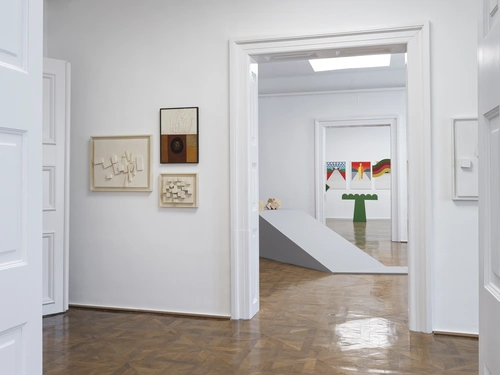
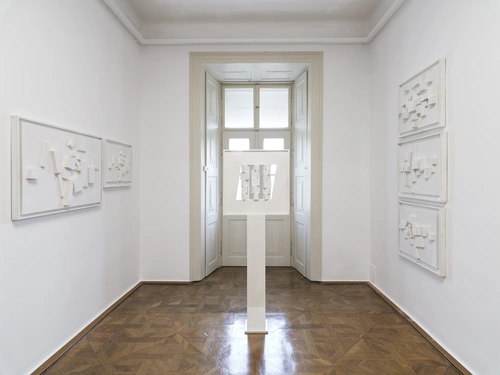
The paintings created in the mid-1960s hold a pivotal position. In these works, he abandoned perspective and began to construct space with basic geometric forms. The paintings combine elements of relief and colour planes, predicting his progression towards the white reliefs produced in the latter half of the 1960s. These are based on geometric principles, the use of wood and an exploration of the relationships between space and light. They became the starting point for his later work with objects, paintings and prints.
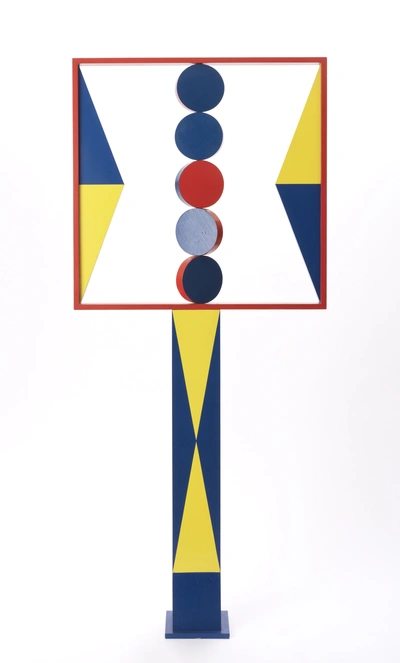
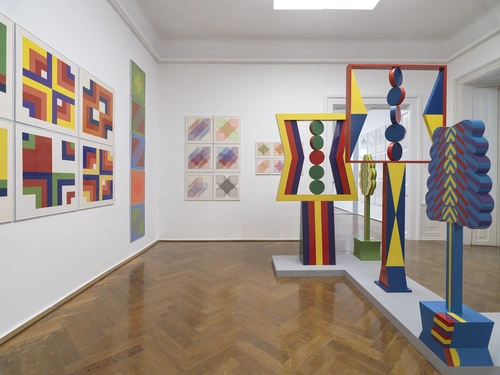
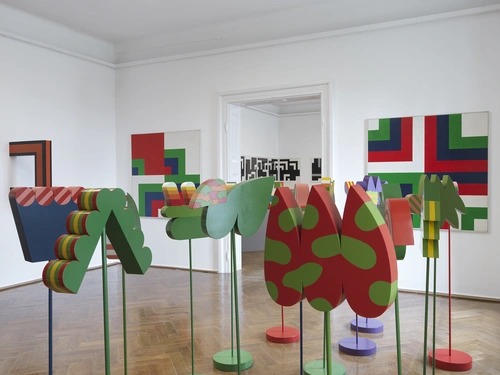
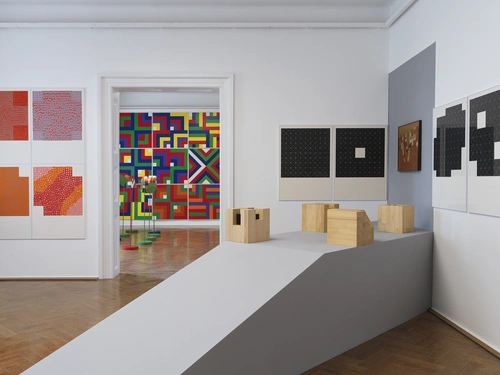
By the late 1960s, Hrvacki had established himself as an important representative of Neo-Constructivism. In exhibitions, he showed objects that were precisely constructed spatial structures, in which colour, form and material establish carefully considered visual relationships. In many of these works, he introduced a view through the object, inviting the viewer to move around it and thereby placing them in the role of an active co-creator of the image.
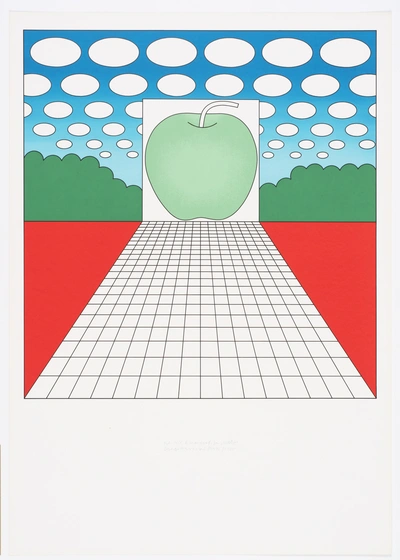
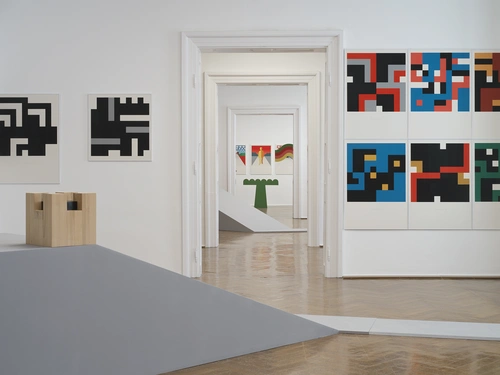
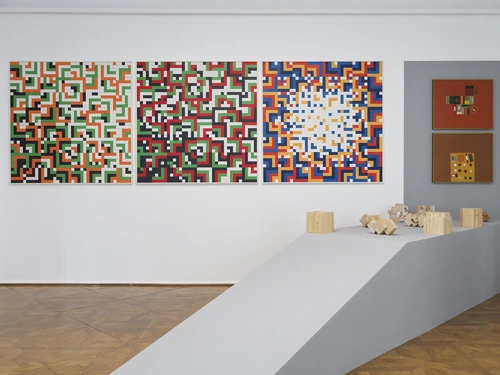
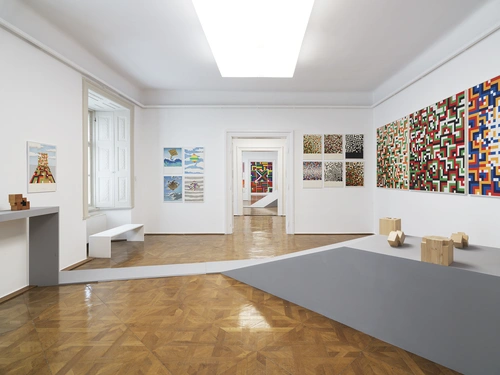
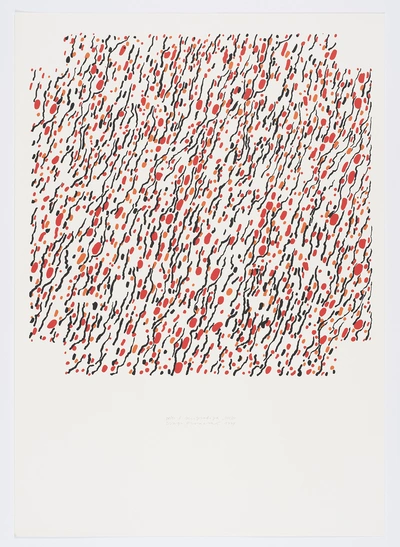
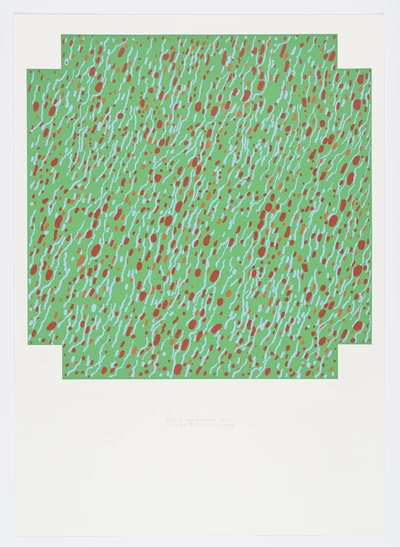
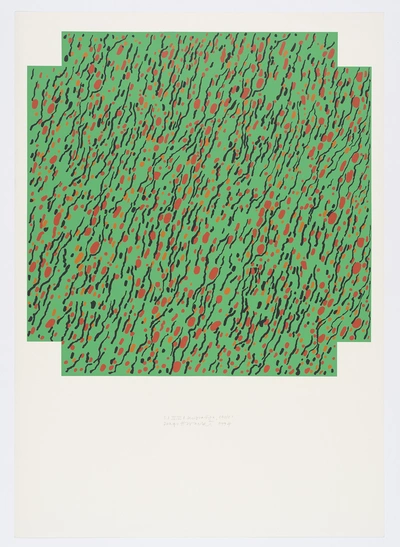
He transposed his exploration of colour planes from object to painting, where he developed geometrically organised pictorial fields with striking colour contrasts. Printmaking also played an important role, particularly screenprinting, which allowed for a precise transposition of colour planes. His prints are based on a square grid, the interweaving of lines and a precise organisation of space. His in-depth knowledge of technique is particularly evident in the accurate printing of fine geometric lines. These densify, form grids and intersect within the compositions, creating a space for the gaze to traverse and often producing optical effects of movement.
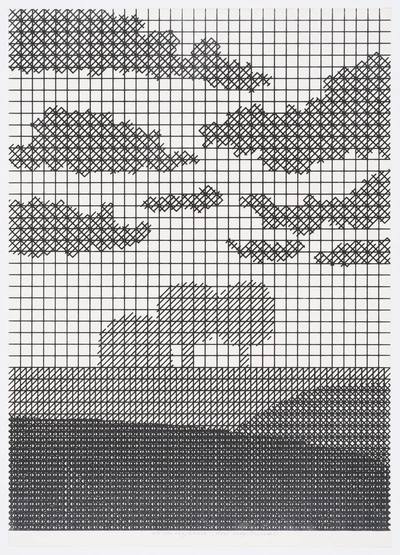
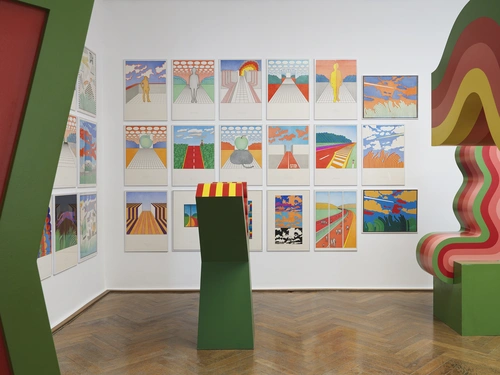
In the mid-1970s, he conceived his first major series of drawings, which predicts his particular interest in drawing as an independent work of art. Among artists associated with geometric and Neo-Constructivist tendencies like Drago Hrvacki, this is more the exception than the rule and therefore constitutes a distinction in his oeuvre. He typically drew on rectangular 70 × 50 cm paper in portrait format, precisely measuring out the top section to contain a central motif in the shape of a square, proportioned to the shorter side of the sheet. Already the organisation of the drawing itself makes it clear that these are not merely sketches or preparatory studies, but carefully structured explorations of composition, pattern, gridding and interweaving of basic forms: squares, rectangles, wavy and broken lines. Upon close observation of several hundred drawings produced over more than a decade, a precise method of working with coloured pencils, Rotring pens and ink becomes apparent. The drawings were clearly created slowly and thoughtfully, suggesting the almost meditative nature of his creative process. In these works, Hrvacki establishes a special space of freedom, in which soft organic and strict geometric elements interweave. In a visually distinctive manner, he brings together seemingly opposing forms which, upon closer inspection, we can recognise again and again in nature and the human environment.
In 2010, Hrvacki made a deliberate return to drawing for the last time, producing a series of works based on the rectangle as a fundamental starting point. He set out the sheet of paper with a thick outline, then broke the space down into smaller sections of varying scale, which appear to recede or protrude through the use of diagonal lines. Symbolically, he returned to the white reliefs, while also pointing to an interest in a different geometric construction of space, typical of his large-format paintings after 2010. In these, he retained a geometric language but developed it into a more open and airy composition. The emphasis shifted to the relationships between the colour fields, their proportions, edges and the tensions that arise between them. The works function as a quiet retreat from a strict system, where precision gives way to a more subtle, almost meditative exploration of colour and space.
Curator of the exhibition: Božidar Zrinski
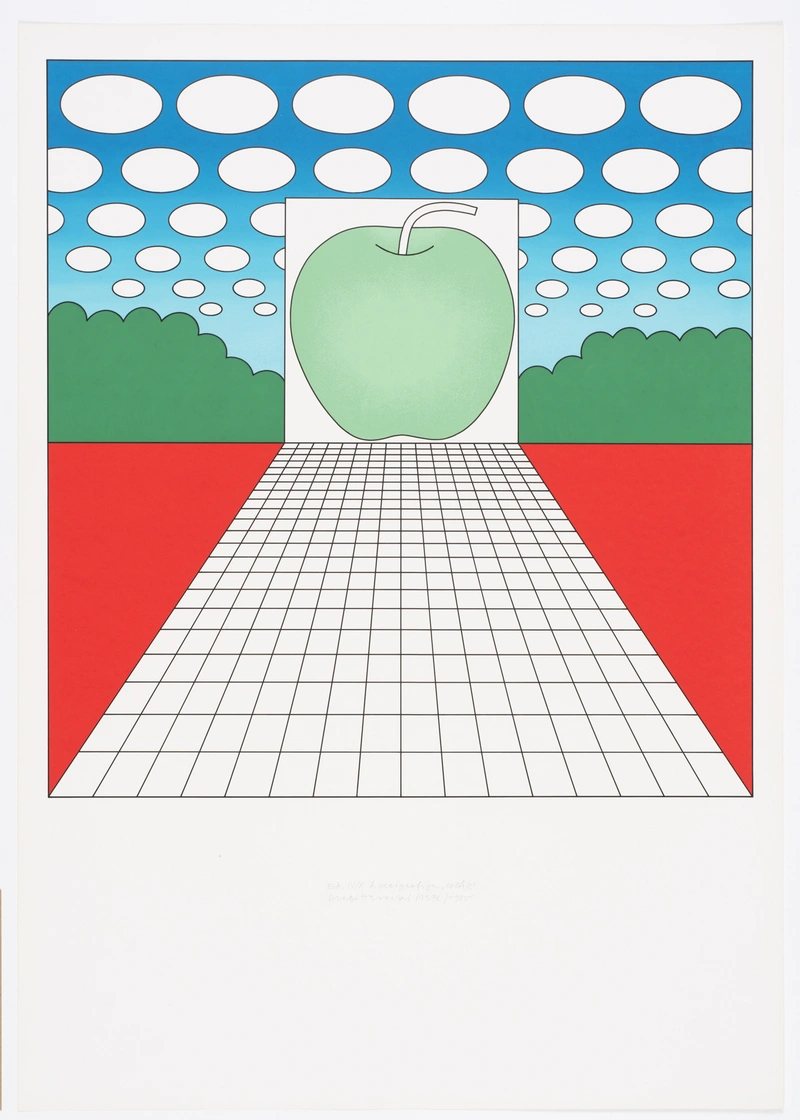
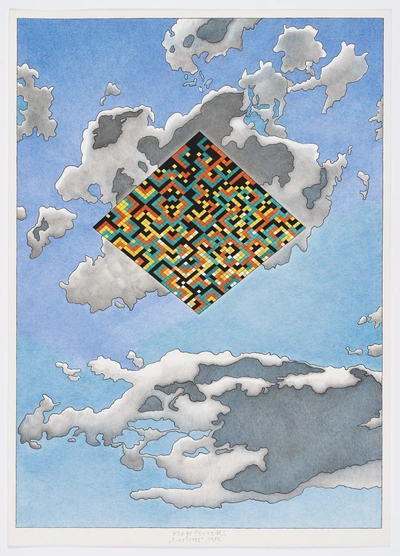
Drago Hrvacki, 0084/C, screenprint, 1976-1985.
Photo: Jaka Babnik. MGLC Archive.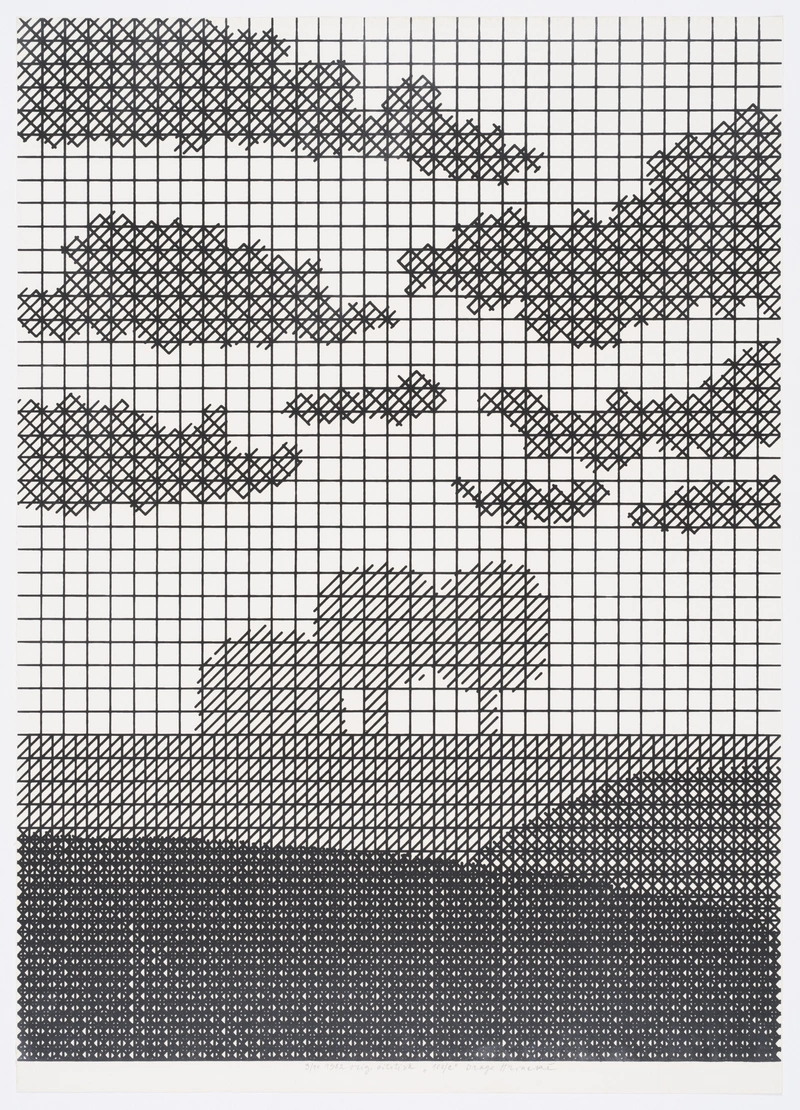
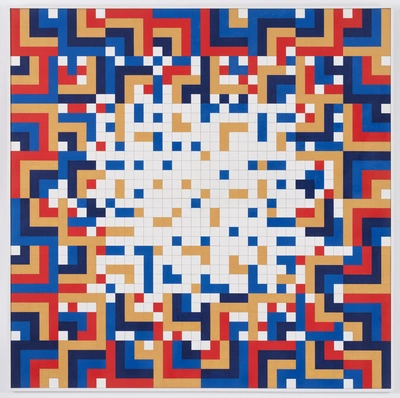
Drago Hrvacki, 103/C, screenprint, 1982.
Photo: Jaka Babnik. MGLC Archive.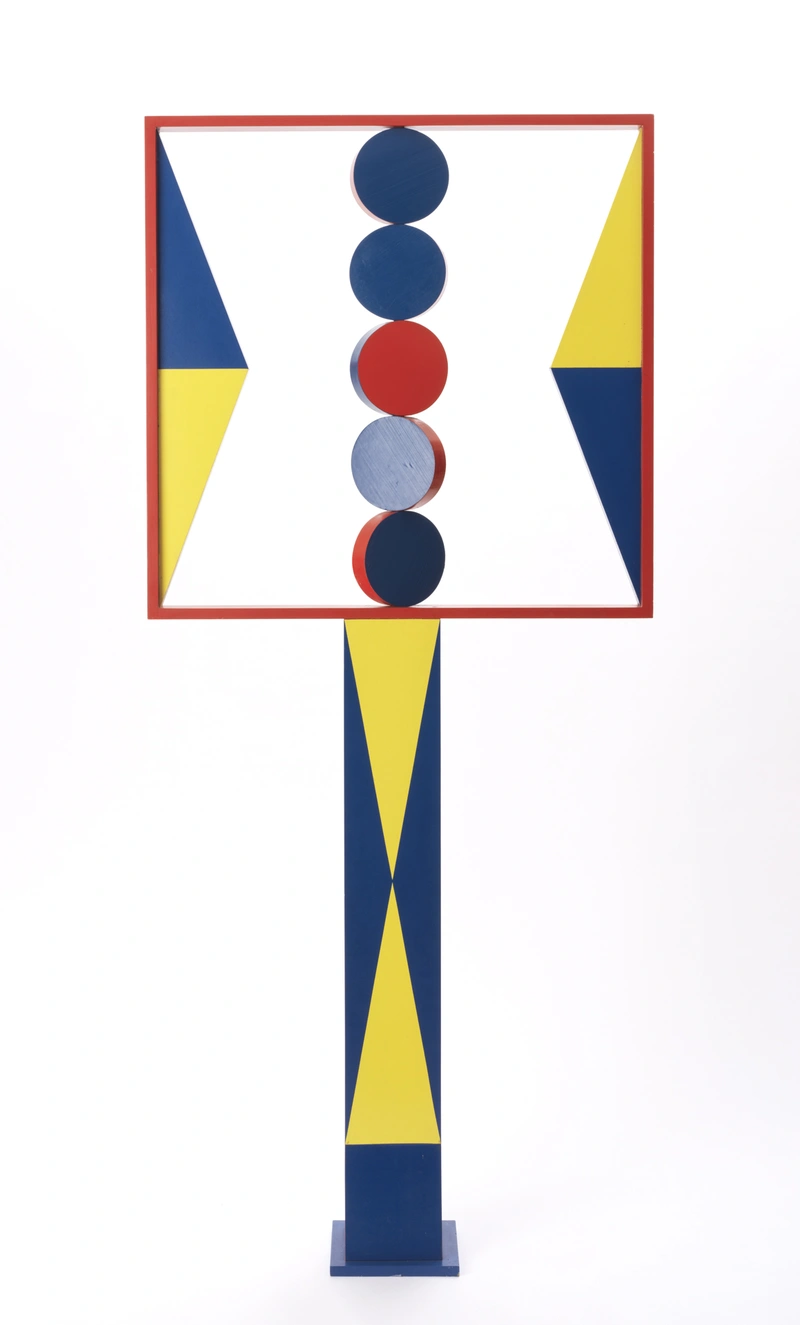
Drago Hrvacki, OT-26, coloured wood, 1968.
Photo: Jaka Babnik. MGLC Archive.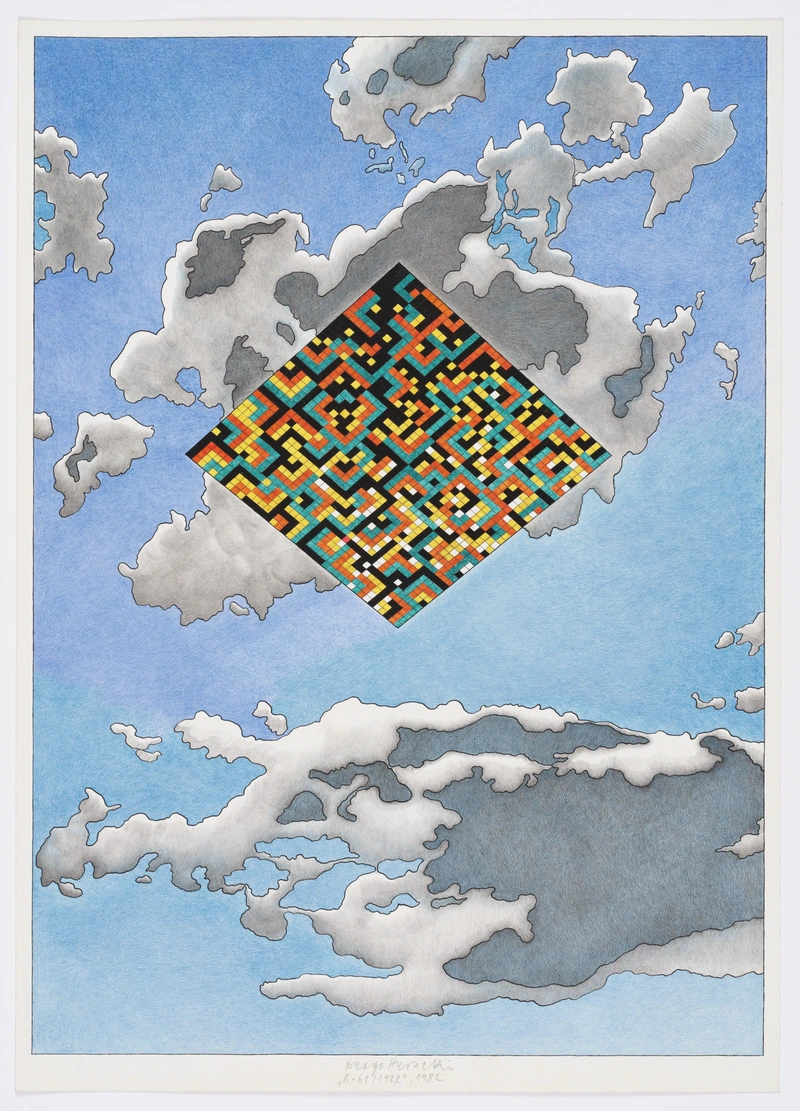
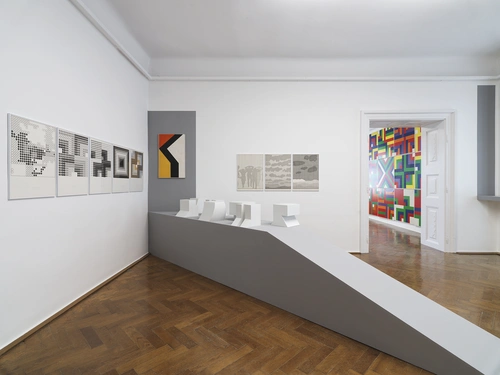
Drago Hrvacki, R-61, 1982.
Photo: Jaka Babnik. MGLC Archive.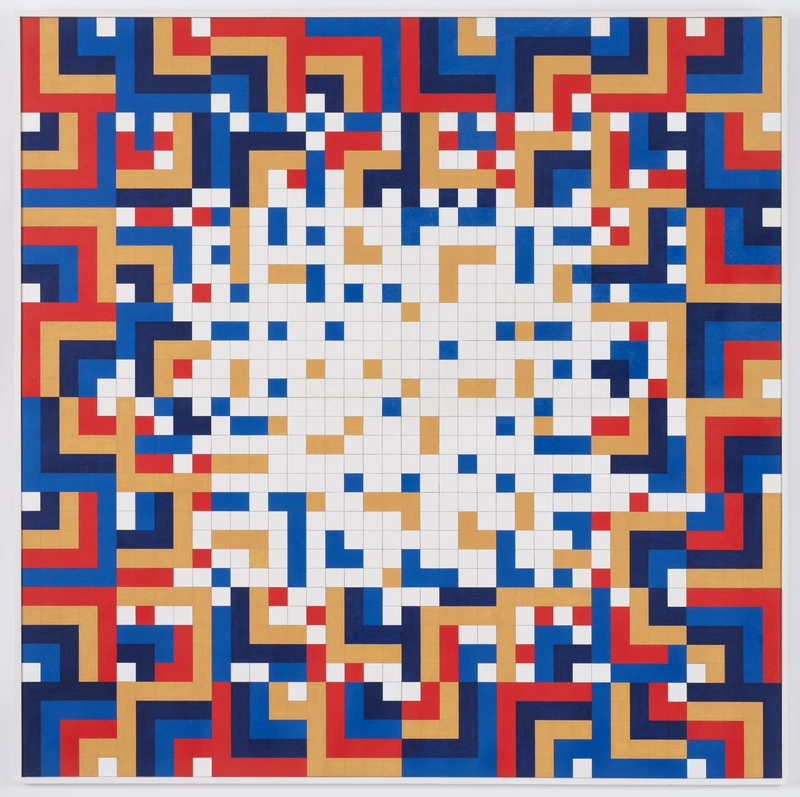
Drago Hrvacki, 024, acrylic, 1982.
Photo: Jaka Babnik. MGLC Archive.Producer of the exhibition: International Centre of Graphic Arts (MGLC)
On its behalf: Nevenka Šivavec
Exhibition curator: Božidar Zrinski
Exhibition design: Dunja Zupančič
Conservation work: Urša Barič
Educational and accompanying programme: Lili Šturm
Public relations: Sanja Kejžar Kladnik
Promotion and marketing: Petra Klučar
Design: Ivian Kan Mujezinovič, Mina Fina / Grupa Ee
Technical support: Urša Barič, Andrej Črepinšek, Tajda Tomšič, Boštjan Vidmar, Borut Wenzel
Installation Views
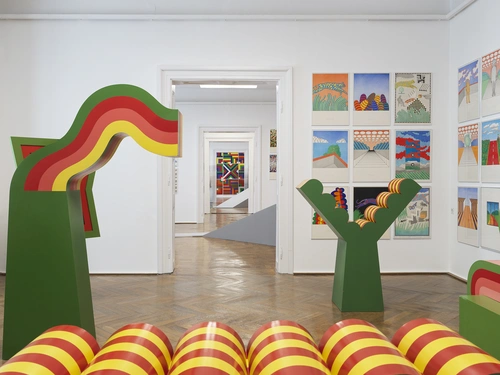
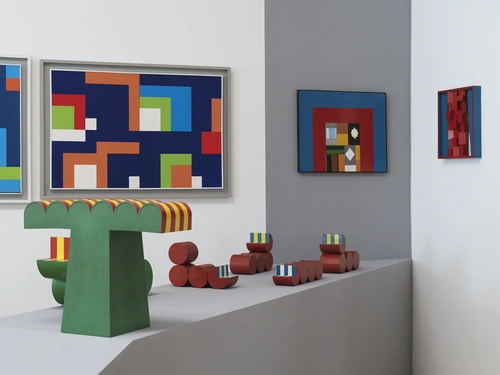
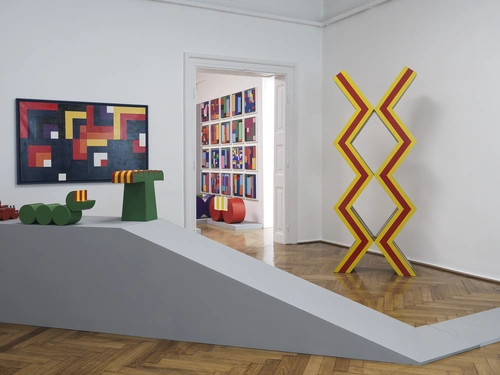
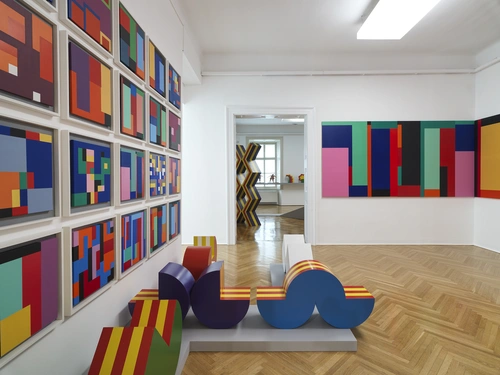
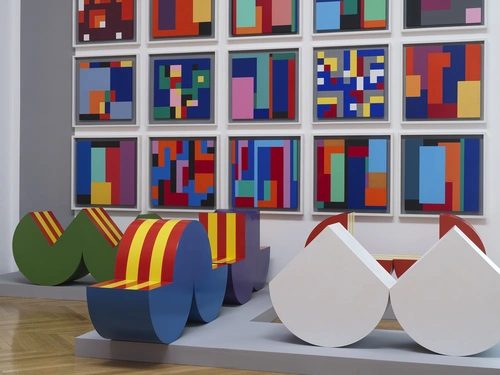
Drago Hrvacki, A Space of Order and Quiet Retreat
Accompanying programme
6 p.m.
Grad Tivoli
3:30 p.m.
Grad Tivoli
10 a.m.
Grad Tivoli and Švicarija
11 a.m.
Lobby of the Faculty of Social Sciences
7 p.m.–7:45 p.m.
Grad Tivoli
8:30 a.m.–4:30 p.m.
Cankarjev dom, Švicarija, Grad Tivoli, Pionirski dom Art Centre
5 p.m.
Grad Tivoli
From the museum shop
Other exhibitions
Currently on view
